The Woman at the Loom — Why Every Rug We Clean Carries More Than Dirt
We clean rugs for a living.
We see what comes off them in the wash — years of accumulated dust, embedded soil, the traces of daily life worked deep into wool and silk and cotton. We've cleaned pieces that carried decades of a family's history in their pile. We've washed rugs that hadn't been properly cleaned in a generation.
And every time we lay one of these pieces flat on our wash floor and see the colors come back — the deep crimson of a madder-dyed field, the indigo of a Caucasian border, the warm ivory of an undyed wool ground — we are reminded of something that has nothing to do with cleaning chemistry.
These rugs were made by women who were waiting.
Penelope and the Loom
We watched the Odyssey recently. And the scene that stayed with us wasn't the sea monsters or the gods or the battles at Troy.
It was Penelope at her loom.
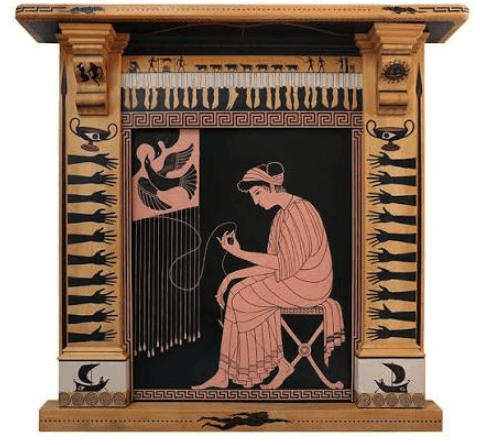
Waiting for Odysseus for twenty years, she remains faithful to him. During this long time, she raises their son Telemachus and manages the royal palace under very difficult conditions. As years passed with no word from Odysseus, 108 suitors moved into her palace, using up her household's food and supplies while constantly pressuring her to pick one of them as a new husband. Medium
Her response to all of it was to weave. By day she worked at the loom. By night she unraveled everything she had made. For three years she kept this going — because the weaving symbolizes the recreation of the fate of a loved one. In Penelope's hands, the thread of her beloved's life. Finishing the canvas means cutting the thread, stopping believing. Custom-Writing
She was not just making cloth. She was keeping something alive. And she was doing it the only way available to her — through the textile.
The Tradition She Was Part Of
Penelope was not unusual. She was part of a tradition so ancient and so widespread that it spans every culture that has ever made hand-woven textiles.
Across Anatolia, Persia, the Caucasus, Afghanistan, Central Asia, and the Americas — wherever men went to war, went to sea, went on long journeys with uncertain ends — women sat at looms. And what they wove was not simply cloth.
In Anatolia, in tribal societies, kilims were woven by women at different stages of their lives: before marriage, in readiness for married life; while married, for her children; and finally, kilims for her own funeral, to be given to the mosque. Feelings of happiness or sorrow, hopes and fears were expressed in the weaving motifs. Southwestern Rugs
Happiness or sorrow. Hopes and fears. These were not metaphors. They were the literal content of the textile — encoded in symbols that every woman in the tribe understood and that outsiders could not read.
The comb motif protected marriage. The ram horn wished strength and courage for the husband. The eight-pointed star carried spiritual aspiration — the hope that those who were gone might find their way through to something higher. The eye motif watched over the family when the husband's eyes were elsewhere.
It is sometimes believed that women who wove ram horn motifs on rugs wished for such qualities in their future husband. Nazmiyal Antique Rugs
Every symbol was a prayer woven in wool. Every knot was tied with an intention behind it.
When the War Came Into the Rug
This tradition of weaving the unspoken continued right into the modern era.
The women of Afghanistan's nomadic tribes have woven rugs by hand for thousands of years. But when the Soviet Union invaded in 1979, these carpet weavers incorporated symbols from the nine-year armed conflict into their rugs. Artisera
When the men went to fight — or were taken, or disappeared — the women kept weaving. And what they wove changed to reflect what was happening around them. The ancient vocabulary of paradise gardens and protective symbols was infiltrated by the imagery of war. Not because the women were celebrating war. But because the rug was the place where they processed what they could not speak aloud.
It was always that way. The rug was the interior life made visible — the grief, the love, the waiting, the faith that the person who left would return.
What We Think About When We Wash These Rugs
We are a rug cleaning business. Our job is professional — inspection, dye testing, hand washing, centrifuge extraction, controlled drying, grooming. These are technical processes carried out with specific chemistry and specific equipment.
But when a tribal rug or a kilim or an antique Persian piece comes to our wash floor, we are aware of something that goes beyond the technical.
The woman who made this rug was sitting at a loom. She was tying knots — thousands, tens of thousands of individual knots — each one requiring a deliberate act of hand and attention. And into those knots she was putting something of herself. Her hope. Her love. Her worry. Her prayer. The image of the person she was waiting for.
Whatever type of carpet or kilim they are creating, women always seem to add a bit of themselves to their traditional designs. Artsy
A bit of themselves. That is an understatement. They added all of themselves. The rug was the only place they could.
We wash the dirt out of these rugs. We return the colors to what they were. We restore the pile and repair the foundation. But we cannot wash out what was woven in — the intention, the symbol, the prayer that has been sitting in those knots for decades or centuries, waiting for someone to recognize it.
That recognition is what makes the difference between a rug and a floor covering. And it is why we handle every piece that comes through our door with the care it deserves.
Professional Rug Cleaning in Boulder — For Rugs That Carry More Than Dirt
At Expert Rug Cleaning, we offer professional rug cleaning in Boulder for Persian rugs, tribal kilims, Afghan weavings, Moroccan flatweaves, Navajo textiles, antique Caucasian pieces, and every hand-knotted rug that deserves more than a carpet cleaner.
Every piece gets a thorough inspection, appropriate cleaning chemistry, proper hand washing, centrifuge moisture extraction, and controlled drying.
We clean what was made by human hands with human intention. We think that matters. And we treat it accordingly.