Story of a Rug: The Tibetan Garden That Came In for a Bath 🌸
A hand-knotted Tibetan rug came through our doors this week and we couldn't help but share its story. Phoenixes, butterflies, ancient symbolism — and a fringe problem caused by a vacuum cleaner. Here's everything this beautiful piece has to say.

This beauty came through our doors recently and stopped us in our tracks.
What you're looking at is a hand-knotted Tibetan rug — most likely woven in Nepal in the traditional Tibetan style, probably mid-to-late 20th century. Nepal became the center of Tibetan rug production after 1959, when Tibetan weavers fled the Chinese occupation and resettled in Kathmandu and surrounding regions, bringing their weaving traditions with them. What followed was one of the most remarkable craft preservation stories of the modern era ,a refugee community that kept an ancient art form alive in a new country, and eventually built an entire export industry around it.
This rug is a wonderful example of that tradition at its most expressive.
What the design is telling you
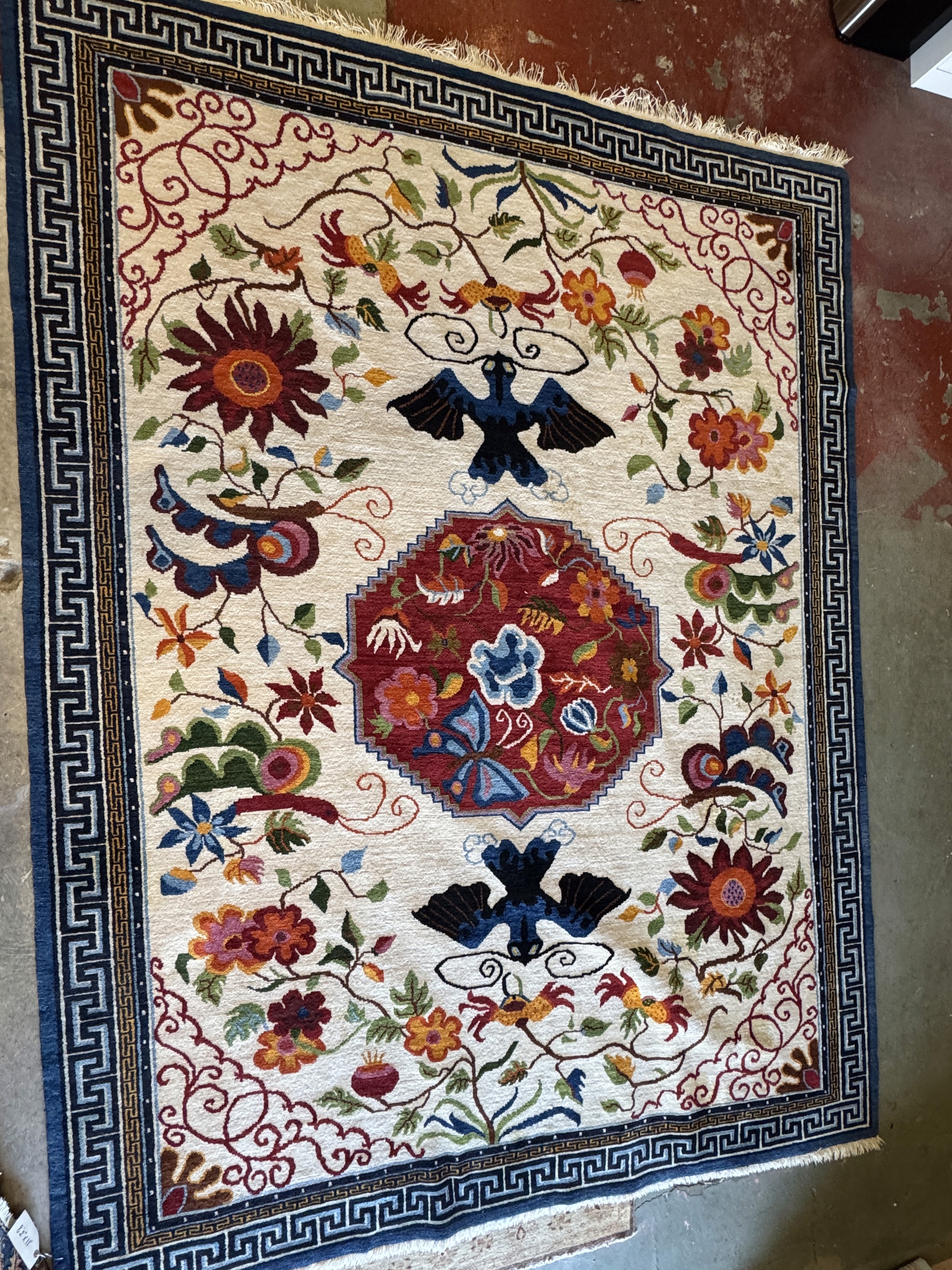
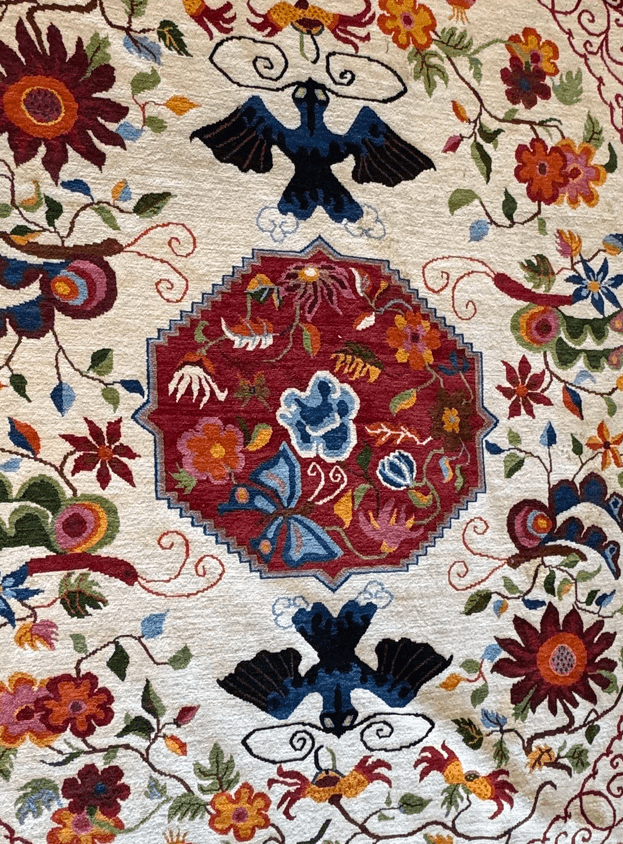
The ivory field immediately sets this piece apart. Ivory grounds are less common in Tibetan rugs than the deep blues and reds you typically see, and they give the design an open, almost luminous quality ,every motif floats against the cream background like a painting on a bright wall.
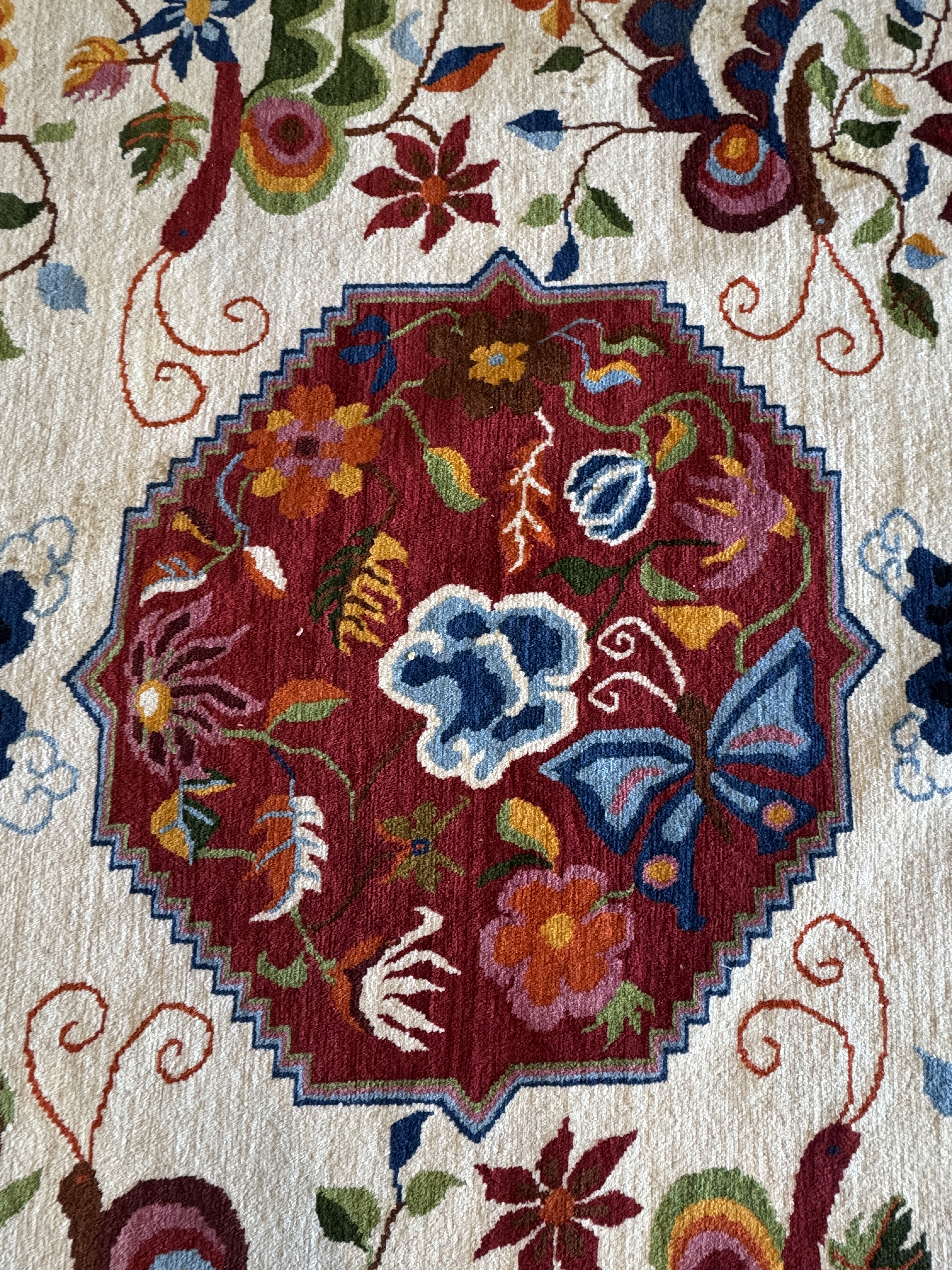
The central medallion is a deep burgundy cartouche filled with butterflies, peonies, and scrolling vines ,a classic Chinese-influenced garden composition that entered Tibetan rug design through centuries of cultural exchange along the Silk Road. The butterfly in Chinese and Tibetan symbolism represents joy, transformation, and the soul. The peony is the flower of prosperity and feminine beauty. Together in a medallion like this, they create a blessing ,a field of good fortune you walk into every time you enter the room.
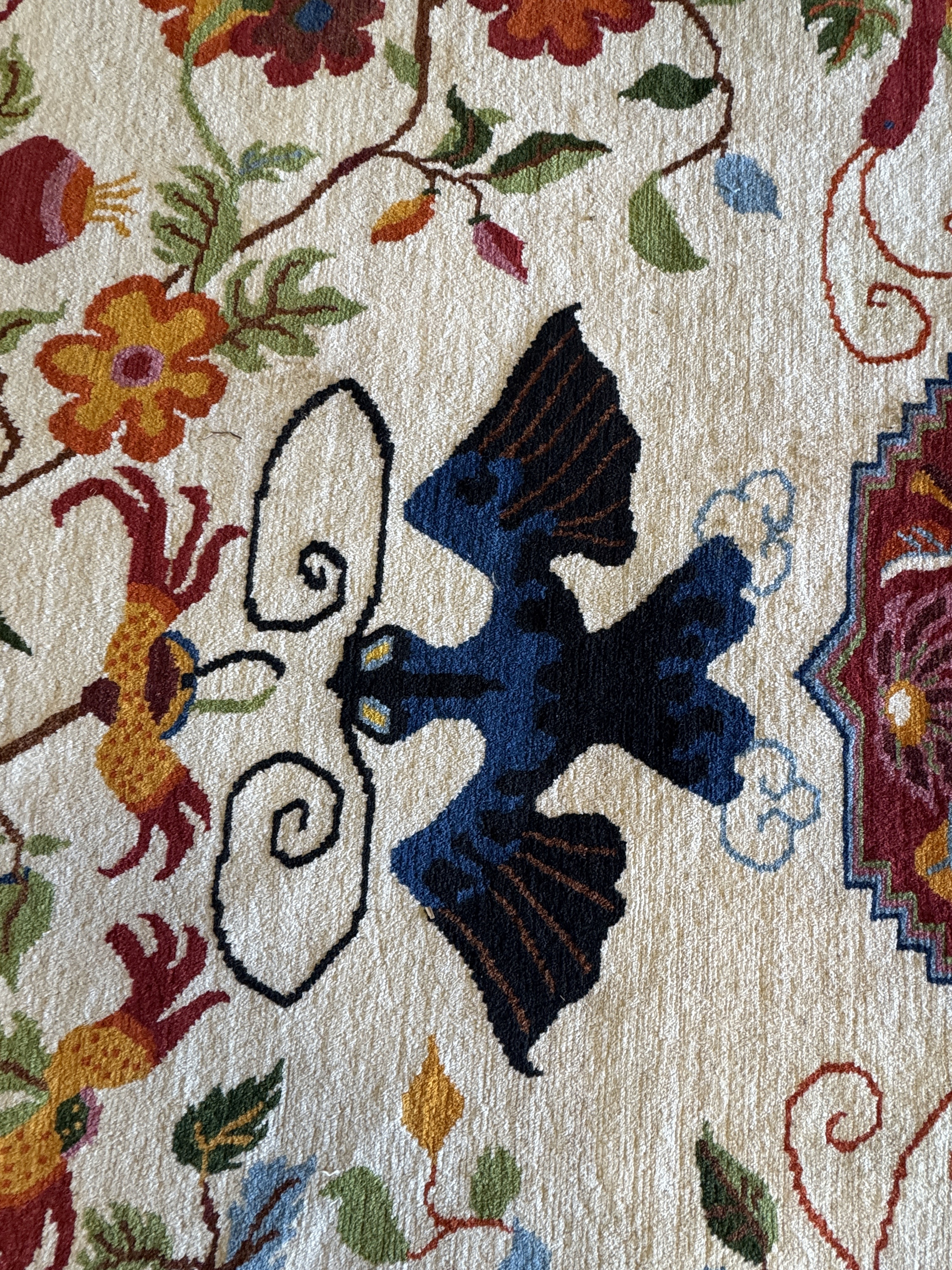
The two large birds dominating the field above and below the medallion are phoenixes , the Tibetan and Chinese firebird, symbol of grace, virtue, and renewal. The phoenix in this tradition is not a creature of destruction and rebirth the way Western mythology frames it. It is a creature of harmony ,it appears only when a virtuous ruler governs with wisdom and the world is at peace. Having two phoenixes on a rug was considered an exceptionally auspicious symbol, a wish for lasting harmony in the home.
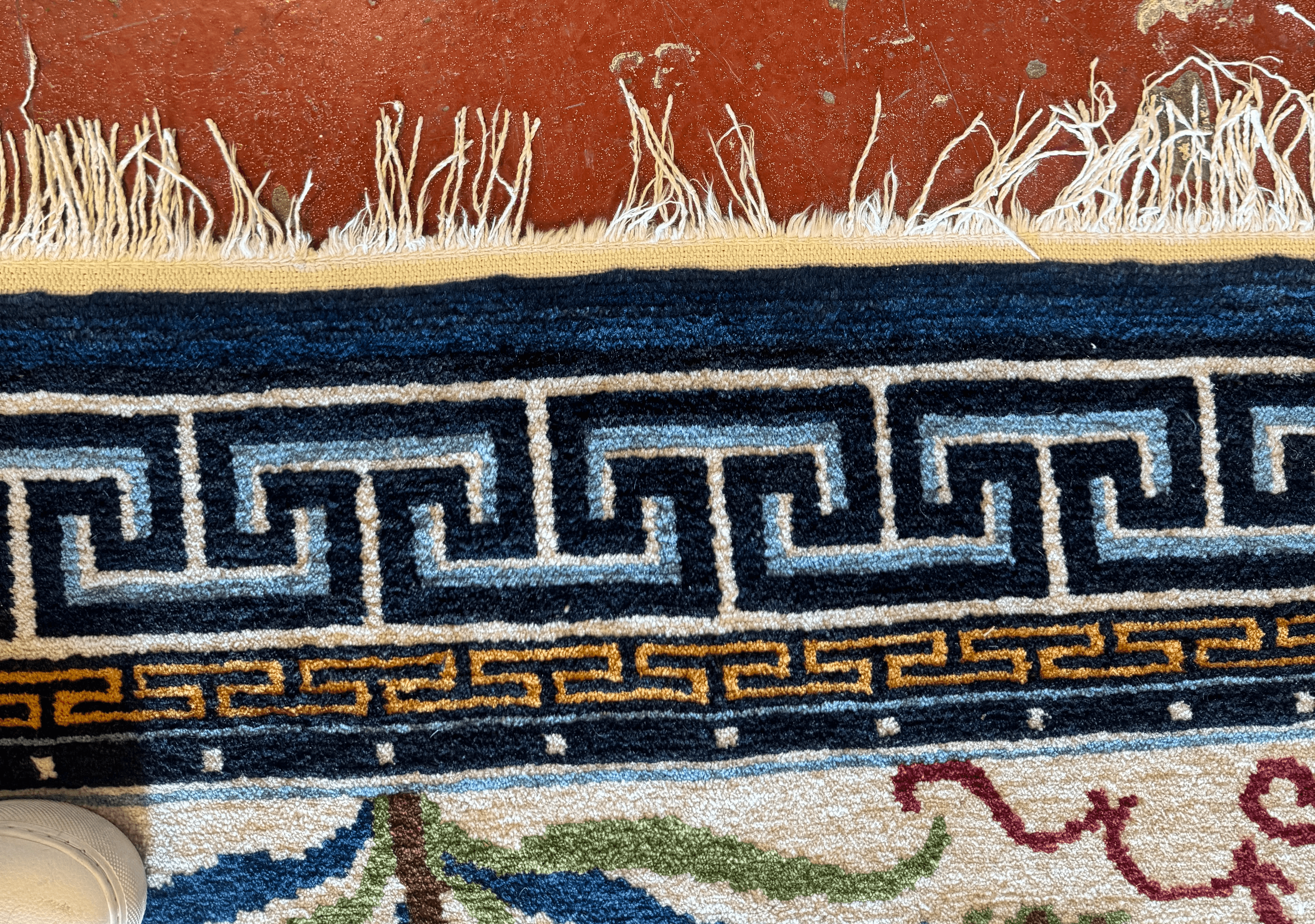
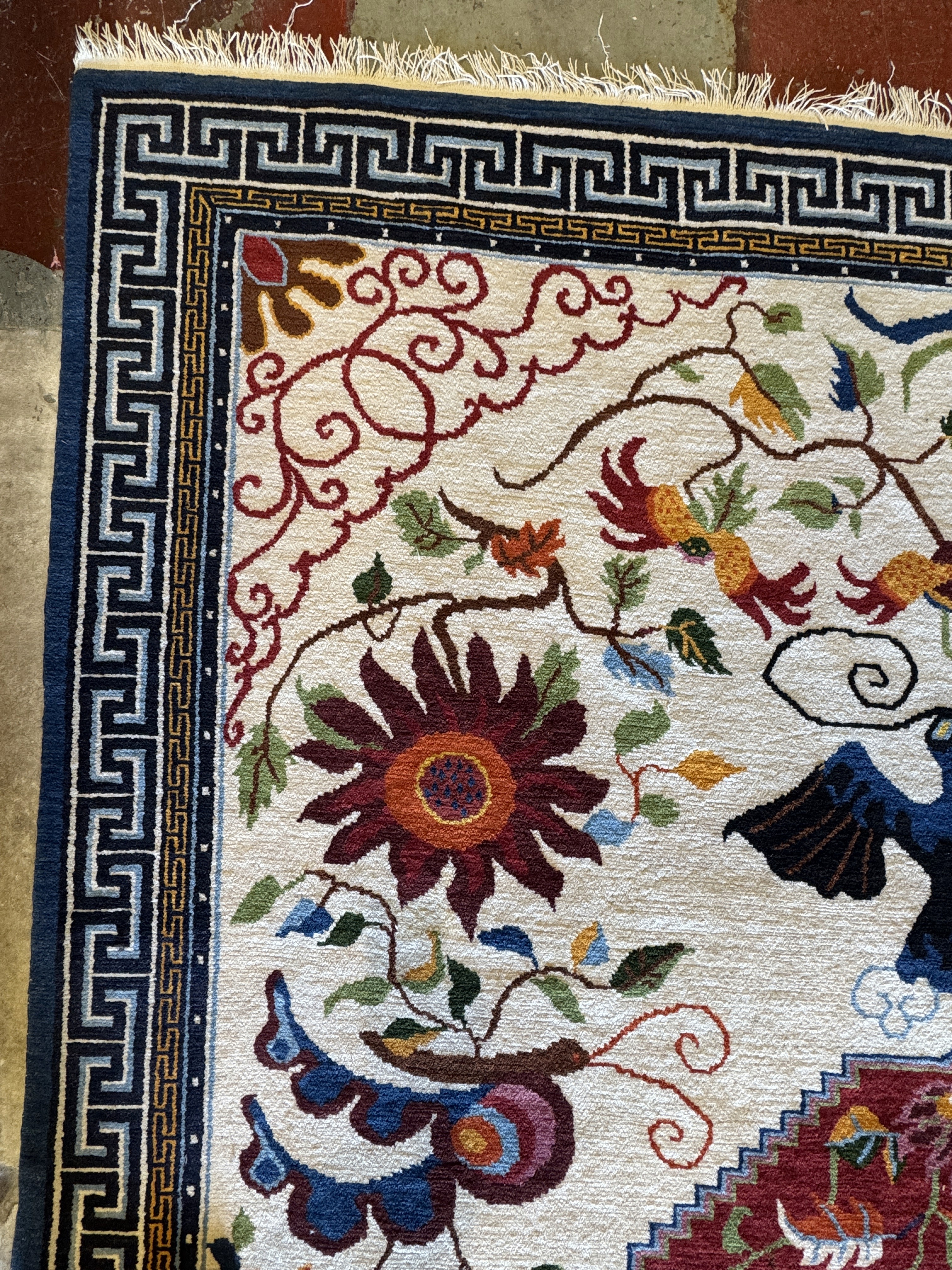
The border is a classic Greek key or meander pattern rendered in deep navy ,a design element that appears across Chinese, Tibetan, and even ancient Greek decorative traditions, representing continuity, the eternal flow of time, and the boundary between the domestic world and the outside one.
The full field is alive with pomegranates, lotus blossoms, chrysanthemums, scrolling clouds, and small birds perched in branches ,each one carrying its own layer of meaning. The pomegranate represents abundance and fertility. The lotus is the Buddhist symbol of purity rising from muddy water. The cloud scrolls are a specifically Tibetan motif, representing the heavens and the realm of the sacred.
This is not a decorative rug in the casual sense. It is a worldview expressed in wool.
What the pile tells us about the weaving
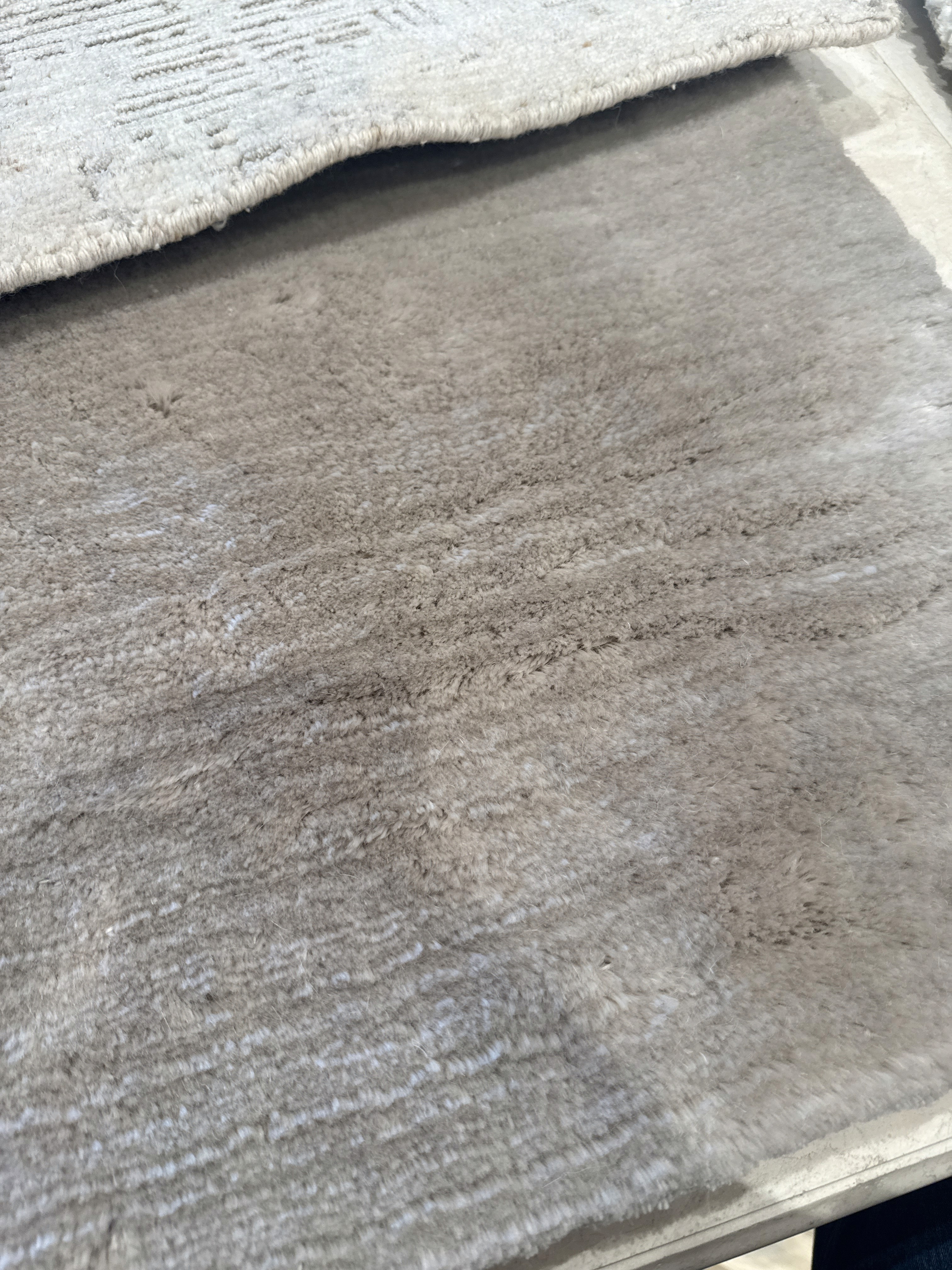
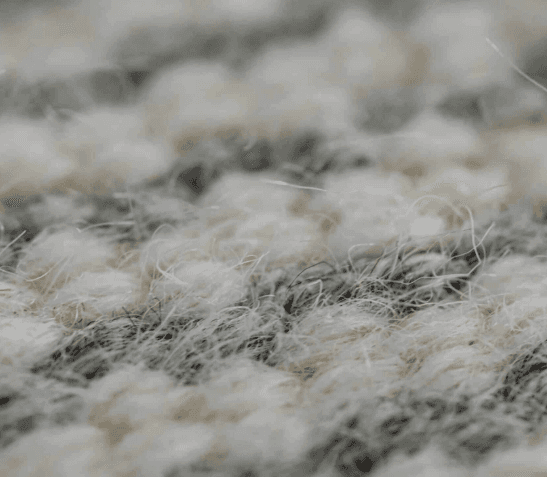
The pile on this rug is thick, lustrous, and well-knotted , characteristic of the high-altitude Tibetan wool that Nepali weavers have always preferred. Tibetan sheep produce a particularly long-staple wool with natural lanolin content that gives the pile its characteristic silkiness and durability. The color palette is rich and well-preserved , the burgundy is deep and even, the navy border holds its saturation, and the ivory field has developed the warm, slightly honeyed tone that good wool acquires gracefully with age.
The knot structure appears to be the traditional Tibetan loop-cut knot ,a unique technique found almost nowhere else in the rug-weaving world, where the weaver wraps yarn around a gauge rod and cuts it to create the pile. This method produces a distinctive, slightly sculpted pile surface that gives Tibetan rugs their characteristic texture.
What came in needing attention
Now look at the top edge of the rug in the full-length photo. See those fringes?
This is one of the most common and most preventable forms of rug damage we see at Expert Rug Cleaning. The fringes on this rug are fraying, tangling, and wearing down ,and the culprit is almost certainly a vacuum cleaner.
Fringes are not decorative trim. They are the exposed warp threads of the rug's foundation , the structural skeleton that holds every knot in place. When a vacuum with a rotating brush or beater bar runs over the fringe, it grabs, twists, and pulls at those foundation threads. Over months and years, that repeated stress weakens and frays them from the outside in. Left unaddressed, fringe damage works its way into the rug's foundation and becomes a much more serious structural repair.
The fix going forward is simple: fold the fringes back onto the rug before vacuuming, or stop the vacuum head before it reaches the edge. Never run a beater bar over the fringe ,not even once.
The rug itself is in good overall condition. The pile is intact, the colors are vibrant, and the foundation is sound. A full hand-wash cleaning will lift the accumulated soil from the ivory field , you can see the slight dulling in the field color that years of foot traffic and dust create ,and bring the colors back to the depth and richness they had when this rug was new.
This is exactly the kind of piece that deserves proper care. The hands that made it , Tibetan weavers in Nepal, working from a tradition displaced by history but never broken ,put real skill and real meaning into every knot. It deserves to be clean, protected, and cared for.
That's what we're here for.
Bring your rug in. We'll take care of it.