Snow Cleaning Your Rug: The Winter Tradition That Has Stood the Test of Time
Laying your rug face-down on fresh snow and beating it from the back is one of the oldest cleaning traditions in the world — and Colorado winters make it entirely possible right here in Boulder. Here's the cultural history behind it, whether it genuinely works, and everything you need to know to do it safely without damaging your rug.

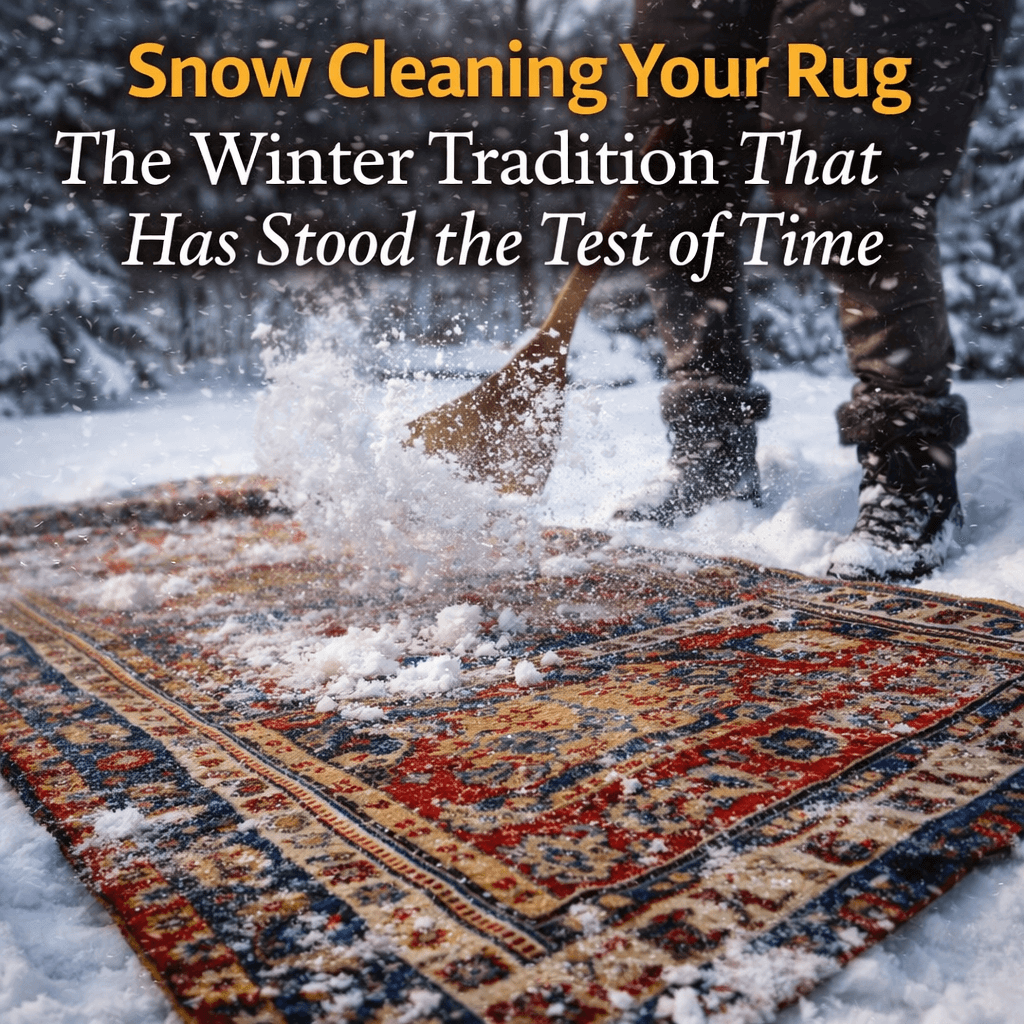
Before professional rug cleaners existed, before detergents and industrial washing machines, people living in cold climates had already figured out one of the most effective ways to clean a rug in winter — and it involved nothing more than fresh snow, a rug beater, and a little elbow grease.
This tradition has survived for centuries because it works. But like any cleaning method, it works best when you understand what it actually does — and what it cannot do.
The cultural roots of snow rug cleaning
Snow rug cleaning is not a quirky internet trend. It is a deeply established household tradition across Russia, Finland, Scandinavia, Eastern Europe, and Central Asia — all regions with long winters, cold dry air, and a centuries-old tradition of living with handmade rugs.
In Finland, rug beating has been such an integral part of domestic culture that many lakeside communities built dedicated rug-washing and beating docks on frozen lakes — structures specifically designed for the winter cleaning ritual. In Russia, beating rugs in the snow was a standard late-autumn and winter chore, as natural as sweeping the floor. Across Central Asia — the birthplace of the hand-knotted rug — cold weather cleaning methods were embedded in the rhythm of domestic life long before any of the modern alternatives existed.
The science behind the tradition is straightforward. Cold air causes natural fibers like wool to contract slightly, loosening their grip on embedded dust and grit. Fresh dry snow acts as a mild natural abrasive that lifts surface soiling without introducing the kind of deep moisture that can damage foundations and dyes. And physical beating from the back of the rug drives loosened particles down through the pile where they can be seen — and accounted for — in the snow beneath.
Does snow cleaning actually work?
It genuinely does — for what it is designed to do.
Snow cleaning is highly effective at removing dry dust, loose grit, and surface particulate matter from rugs. If you have ever beaten a rug in fresh snow and then looked at the snow it was lying on, you already know this. The amount of dirt that comes out of even a recently vacuumed rug is remarkable and tells you everything you need to know about the limits of vacuuming alone.
The cold also helps. Colorado winters produce exactly the kind of crisp, dry, cold air that makes this method work well. The dry air helps fibers release soil more readily, and the low humidity means the rug dries quickly after its brief contact with snow.
What snow cleaning cannot do is equally important to understand. It does not remove stains. It does not neutralize pet urine odor. It does not address oils, biological soiling, or deep-set residue from years of accumulated use. For those issues, full submersion hand-washing is the only method that actually reaches the source. Snow cleaning is a powerful complement to professional care — not a replacement for it.
How to do it the right way
Pick the right day. Fresh, dry, powdery snow is what you want. Wet, heavy, or slushy snow holds too much moisture and can soak into your rug's foundation — which creates exactly the conditions for mildew, dye bleeding, and dry rot. If the snow is wet, wait for a better day.
Lay the rug face-down on fresh snow. Place the pile side down on a clean, flat area of undisturbed snow. This protects the pile and gives you access to the back of the rug, which is where the work happens.
Beat methodically from the back. Use a purpose-made rug beater or a clean broom handle. Work in firm, even strokes across the entire surface of the rug. The goal is to drive loosened soil down through the pile into the snow beneath — not to stress the foundation with overly aggressive beating.
Check the snow underneath. Flip the rug over partway through and look at what has collected in the snow beneath it. This gives you a clear picture of how much soil has been released and whether additional beating is needed.
Air and dry before bringing inside. Even brief snow contact introduces some surface moisture. Shake the rug out well and allow it to air fully before laying it back on the floor. Never lay a damp rug flat on hardwood — moisture trapped between the rug and the floor damages both.
What to watch out for
Wet snow is the biggest risk. It bears repeating because it causes the most damage. Moisture that penetrates deep into a rug's foundation is very difficult to fully dry out, especially in a thick wool pile. If the snow is anything other than dry and powdery, do not do this.
Protect the fringes. Never beat the fringes directly. Fringes are the structural foundation threads of the rug — they are not decorative trim — and aggressive beating can pull, twist, and damage them permanently. Fold them back or avoid them entirely.
Be gentle with fine and antique pieces. Silk rugs, very fine Persian pieces, and antique rugs with fragile foundations are not good candidates for snow beating. If you are not sure whether your rug can handle it, bring it to us and we will take a look.
Do not beat in extreme cold. Very low temperatures — well below zero — can make natural fibers brittle and more vulnerable to stress damage. A typical Boulder winter day in the teens or twenties is fine. An extreme cold snap is not the right time.
Know the limits. If your rug has stains, odors, or soiling that dry beating will not resolve, it needs a professional cleaning. Snow beating is a maintenance tool — a good one — but it is not a deep clean.
When to call a professional instead
Some situations call for more than winter tradition can provide. If your rug has pet accidents, visible staining, persistent odor, signs of moth activity, or has not had a professional cleaning in more than two or three years, snow beating is not going to get you where you need to be.
At Expert Rug Cleaning we offer full submersion hand-washing for all rug types — wool, silk, Persian, Oriental, tribal, and modern area rugs. Our process reaches every layer of the rug and addresses the soiling that surface methods simply cannot touch. We use pH-balanced, fiber-safe solutions and air dry every rug carefully and completely.
If your rug came through a Colorado winter and needs more than a snow beating — or if you just want an honest assessment of its condition — drop it off at our Boulder location. No appointment needed.