Everything You Need to Know About Owning a Moroccan Shag Rug — Including How to Clean It
We got a call recently that we hear more often than you'd think. A client had a beautiful Moroccan shag rug and wanted to clean it at home with a pressure washer. We told her to put it away. The problem with pressure washing a thick wool shag rug isn't getting it wet — it's what happens after. A saturated foundation that doesn't dry properly becomes a mold problem within 24 to 48 hours, and by the time you smell it, the damage is already done. At Expert Rug Cleaning in Boulder, we clean Moroccan and shag rugs with a process built specifically for long-pile wool — flat hand washing, centrifuge extraction, controlled drying, and specialist pile grooming. Here's why it matters and why there's no shortcut worth taking.
We got a call recently that we hear more often than you'd think.
A client had a beautiful Moroccan shag rug — long pile, thick wool, the kind of piece that makes a room feel like a destination. It had picked up some dirt and odor over time and she wanted to clean it. Her plan? Take it outside and hit it with a pressure washer.
We told her to put the pressure washer away.
Here's why — and here's what we do instead.
We understand the impulse. A shag rug is thick, the pile is long, and it feels like it needs something powerful to get through all that fiber. A pressure washer seems like the logical solution.
It isn't.
The problem isn't getting the rug wet. The problem is what happens after.
A shag rug — whether it's a Moroccan Beni Ourain, a Berber flatweave, or any long-pile wool piece — has an enormous amount of fiber packed into a dense, deep foundation. When that foundation gets saturated with water, it holds onto moisture the way a sponge holds onto water. You can't see it, you can't feel it from the surface, but deep inside the base of the rug, moisture sits and lingers.
And moisture that lingers becomes mold.
It doesn't take long. In Colorado's variable climate — humid summers, cool basements, shaded patios — a thick shag rug that wasn't dried properly can start developing mold and mildew within 24 to 48 hours of getting wet. By the time you smell it, the damage is already done. Mold in a rug foundation is not a surface problem. It's a structural one. And in many cases it's irreversible.
Beyond mold, a pressure washer's force can damage the long fibers of a shag pile — matting them, tangling them, and permanently altering the texture that makes these rugs so beautiful in the first place. The high-pressure stream pushes dirt deeper into the foundation rather than extracting it. And it does nothing to address the oils, dander, and embedded debris that accumulate at the base of the pile over time.
The result of a home pressure wash is often a rug that looks marginally better on the surface, smells fine for a week, and then develops a deep musty odor that no amount of airing out will fix.
Why Shag Rugs and Moroccan Rugs Need Specialist Cleaning
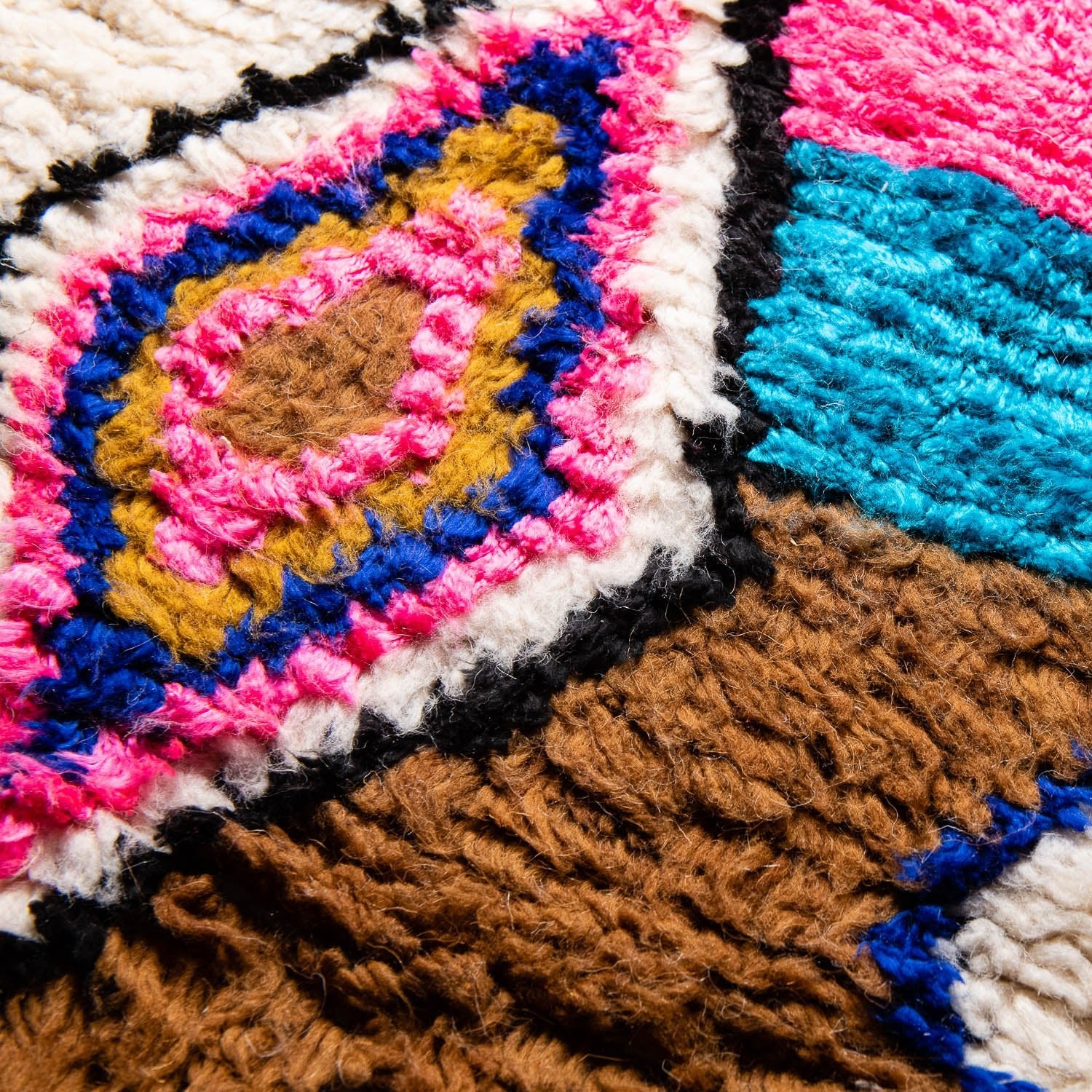
Moroccan rugs — Beni Ourains, Azilals, Boucharouites, Beni M'Guilds — are among the most popular rugs in Colorado homes right now, and for good reason. Their organic, undyed wool pile, their loose geometric patterns, their relaxed organic character — they fit beautifully into the mountain-modern aesthetic that defines so many Front Range interiors.
But they are also among the most demanding rugs to clean properly.
Most Moroccan shag rugs are made from natural wool — often undyed or minimally processed — which means they respond to water very differently than a synthetic or tightly-knotted pile rug. The fibers swell when wet. The long pile can tangle and mat if agitated incorrectly. The foundation, which is typically woven loosely to accommodate the thick pile, holds water deep and releases it slowly.
Add to that the fact that many Moroccan rugs have never been commercially cleaned — they arrive from their country of origin carrying years of lanolin, dust, and organic debris embedded at the base of the pile — and you have a cleaning job that requires patience, the right equipment, and genuine expertise.
What We Actually Do
When a shag rug or Moroccan piece comes into our shop, it goes through a process that's completely different from anything you could replicate at home — or that a standard carpet cleaner could offer.
First, a full inspection. We examine the pile, the foundation, the fiber content, and the dye stability. Long-pile rugs trap an extraordinary amount of debris at their base — dust, pet dander, sand, hair — that isn't visible from the surface. We assess all of it before a drop of water touches the rug.
Then, flat hand washing. We wash shag and Moroccan rugs completely flat, by hand, using pH-balanced cleaning solutions appropriate for the specific fiber. Washing flat is critical — it prevents the long pile from tangling, keeps the foundation from distorting, and ensures even cleaning across the entire surface. We work the solution gently through the pile and into the foundation, then rinse thoroughly until the water runs completely clear.
Centrifuge extraction. This is the step that makes the biggest difference and that no home cleaning method can replicate. After washing, we use a professional centrifuge to spin the excess water out of the rug before drying begins. For a thick shag rug, this removes an enormous volume of moisture that would otherwise have to evaporate slowly from the foundation — which is exactly where mold begins. The centrifuge gets the rug to a safe moisture level in minutes rather than the hours or days it would take to air dry from fully saturated.
Hanging and controlled drying when needed. After centrifuge extraction, rugs are hung or laid flat in our drying area with controlled airflow. For particularly thick pile, we monitor the drying process and ensure the foundation reaches a safe moisture level before the rug is cleared. No shortcuts. No sending a damp rug home.
Grooming with a specialist brush. Once dry, every shag and Moroccan rug gets groomed with our specialist brush — working through the pile to restore its natural direction, separate any fibers that have settled during drying, and bring back that full, lifted texture that makes these rugs feel luxurious underfoot. This step is what separates a professionally cleaned shag rug from one that just got wet and dried. The difference is visible immediately.
What Happens If You Skip Professional Cleaning
We've seen the results of DIY shag rug cleaning more times than we'd like. The most common outcomes:
Mold and mildew. The number one consequence of inadequate drying. Once mold establishes itself in a rug foundation, it's extremely difficult to reverse. The smell is distinctive and persistent, and the structural damage it causes — breaking down the foundation fibers — can be permanent.
Matted, tangled pile. Long fibers that were agitated incorrectly or dried without grooming mat together and lose their lift. The rug feels flat and coarse rather than soft and full. In severe cases, the pile can felt — essentially turning into a solid mass — which is irreversible.
Residue buildup. Home cleaning products leave residue in the fiber that attracts new dirt faster than before. A rug that was cleaned at home often looks dirtier within weeks than a professionally cleaned one does after months.
Shrinkage and distortion. Wool rugs that dry unevenly — or that dry too quickly with heat — can shrink, buckle, or distort permanently.
We Clean Moroccan and Shag Rugs Every Week
At Expert Rug Cleaning in Boulder, Moroccan shag rugs are one of the most common pieces we handle. We've developed our process specifically for long-pile wool pieces — the flat washing, the centrifuge extraction, the controlled drying, the specialist grooming. It works, and the results speak for themselves.
If you have a shag rug, a Beni Ourain, an Azilal, or any long-pile piece that needs cleaning — please don't pressure wash it. Call us instead.