How to Vacuum Your Rug Without Damaging It: A Guide for Boulder Homeowners
Lead with the mistake: Vacuuming your rug sounds simple — but done the wrong way, it's one of the most common causes of fringe damage and premature wear we see at Boulder Rug Collective. A few small adjustments to your routine can make a big difference in how long your rug stays beautiful.

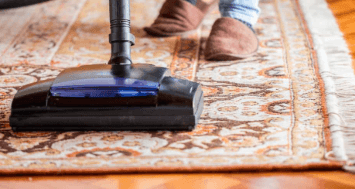
Vacuuming your rug sounds simple enough — but done the wrong way, it's one of the most common causes of fringe damage, fiber wear, and premature aging we see at Boulder Rug Collective. The good news? A few small adjustments to your routine can make a big difference in how long your rug stays beautiful.
The most important rule: never vacuum the fringes
This is the number one mistake we see. Fringes are not decorative trim — they are the structural end of the rug's foundation. They are the actual warp threads that hold the entire piece together. Running a vacuum over them, especially with a rotating brush or beater bar, can pull, tangle, twist, and eventually tear them right out of the rug.
Once fringe is damaged, it's difficult and costly to restore. In many cases the damage is permanent.
The right approach: fold the fringes back onto the rug before you vacuum, or vacuum up to the edge and stop. Never run the vacuum head over or across the fringe — not even once.
The corners are just as vulnerable
Corners take a beating from vacuums more than any other part of the rug. The edge of the vacuum head catches the corner, lifts it, and the suction or brush pulls at the foundation threads along the border.
Over time this leads to unraveling edges, buckling corners, and border damage that works its way inward. Always approach corners carefully — vacuum parallel to the edge rather than running over it, and never vacuum against the direction of the pile along the border.
Turn off the beater bar for handmade rugs
Most upright vacuums have a rotating brush or beater bar designed for wall-to-wall carpet. On a handmade or natural fiber rug — wool, silk, cotton, jute — that beater bar is too aggressive. It grabs and pulls at the pile, weakens the knots over time, and can cause fuzzing and fiber loss.
If your vacuum has a suction-only setting, use it. If not, raise the vacuum head to its highest setting to reduce contact with the pile. A canister vacuum with a floor attachment and no rotating brush is the safest tool for handmade rugs.
Vacuum with the pile, not against it
Every rug has a pile direction — run your hand across the surface and you'll feel it. Vacuuming with the pile (in the direction the fibers naturally lie) is gentler and more effective. Vacuuming against the pile lifts and stresses the fibers unnecessarily.
To find your pile direction, look at the rug from a low angle. The side that looks smoother and slightly shinier is with the pile. Vacuum in that direction.
How often should you vacuum?
For most rugs in a typical Boulder home, once a week is plenty for high-traffic areas. For rugs under furniture or in low-traffic rooms, every two weeks is fine. Over-vacuuming is a real thing — frequent passes with an aggressive machine add up to cumulative fiber wear over months and years.
A light pass is always better than a slow, heavy one. Let the suction do the work.
What vacuuming can't do
Regular vacuuming removes surface dust and loose soil — and that's important, because gritty particles that settle into the pile act like sandpaper on the foundation over time. But vacuuming doesn't reach the deep-set dirt, oils, and allergens that work their way into the base of the rug.
That's what professional hand-washing is for. We recommend a full professional cleaning every 1 to 3 years depending on traffic, pets, and the rug's location — and more often if anyone in your home has allergies.
Quick reference: vacuuming do's and don'ts
Do:
Vacuum with the pile direction
Use suction-only mode or raise the head height for handmade rugs
Fold fringes back before vacuuming
Vacuum the back of the rug occasionally to dislodge deep dirt
Use a low-suction setting on delicate silk or antique pieces
Don't:
Run the vacuum over fringes — ever
Vacuum over corners and edges aggressively
Use a beater bar on wool, silk, or handmade rugs
Vacuum against the pile direction
Assume vacuuming replaces professional deep cleaning