Found a Rug at an Estate Sale? Here Is the First Thing You Should Do
Estate sales along Colorado's Front Range are one of the best places to find genuine handmade rugs at remarkable prices. But every rug that comes home from an estate sale carries decades of history in its pile — and not all of it is good. Here is what to look for when you are rug hunting, and why professional cleaning before placement is the most important step most people skip.


The Front Range estate sale scene is rich with rug finds
Boulder, Louisville, Lafayette, Longmont, Fort Collins, Loveland — the established neighborhoods of Colorado's Front Range have been home to generations of families who collected, traveled, and decorated with handmade rugs. Persian pieces from the 1960s. Tribal rugs from Afghanistan and the Caucasus acquired during decades of international travel. Navajo weavings bought from trading posts. Chinese and Tibetan pieces that made their way into Colorado homes during the great mid-century era of rug collecting.
These rugs are still out there — sitting on floors, rolled in closets, stacked in basements — and when the homes they lived in go to estate sale, the rugs go with them. Often underpriced. Often unrecognized. Always worth a look.
How to spot a genuine handmade rug at a sale
Estate sales move fast. The best pieces go in the first hour and serious buyers arrive before the doors open. When you find a rug worth examining, here is what to check quickly and confidently.
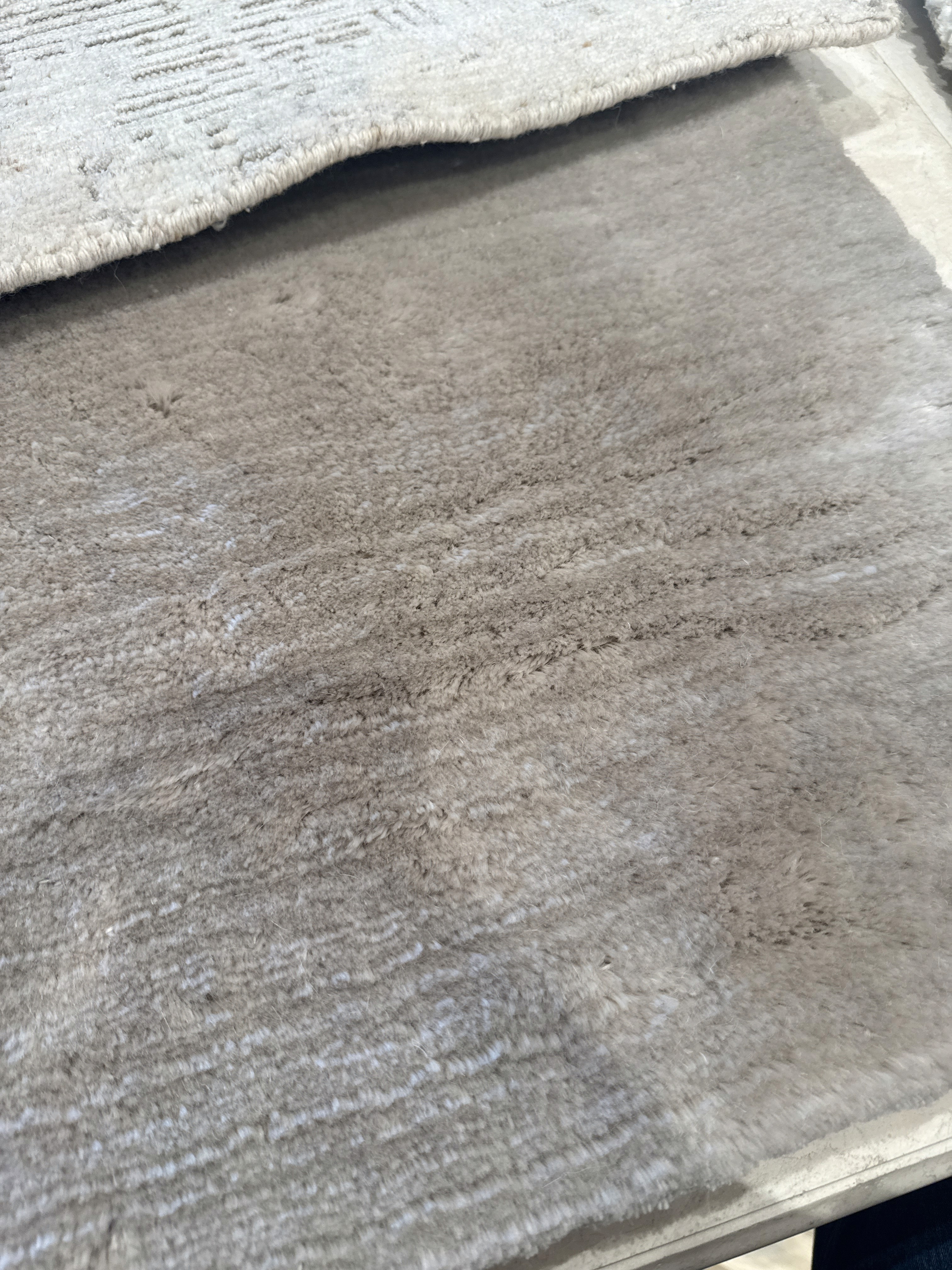
Flip the corner and look at the back. A genuine hand-knotted rug shows individual knots on the reverse — slightly irregular, clearly tied by hand, with the pile threads visible as loops or cut ends. A machine-made rug has a perfectly uniform printed-looking back, often with a latex or fabric mesh backing. If you see latex, it is machine made.
Check the fringes. On a genuine handmade rug, fringes are extensions of the foundation — the actual warp threads the rug was built on. Pull gently. If they pull away easily or feel glued, they were attached after the fact and the rug is machine made.
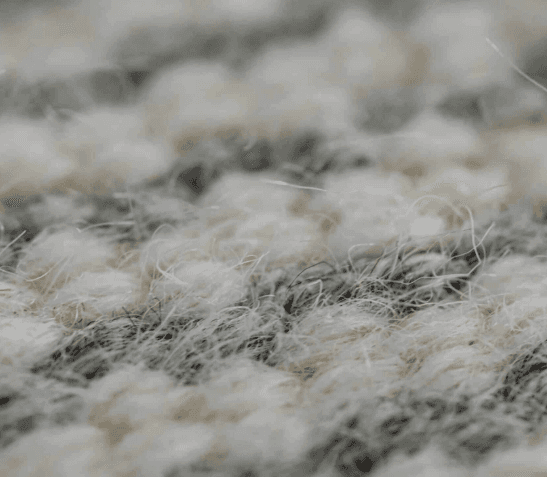
Feel the pile. Genuine wool has warmth, resilience, and a natural springy recovery when pressed. Synthetic pile feels cooler and more uniform. Wool also has a slight natural lanolin scent when warmed by handling — subtle but distinctive.
Look at the colors from a distance. Natural and quality dyes on genuine wool have depth and slight variation — colors that glow rather than glare. Harsh, perfectly flat, uniform colors are a sign of low-quality synthetic dye on machine-made pile.
What to watch out for before you buy
Not every estate sale rug deserves a second look. These are the conditions that should affect what you are willing to pay — or whether you buy at all.
Moth damage. Look carefully at the pile for thin, patchy, or eaten-away areas — especially in corners, along edges, and in areas that would have been under furniture. Moth larvae eat wool from the base of the pile, leaving thin or bare patches that can be repaired but at real cost. A rug with visible moth damage should never come into your home without professional treatment first — moth eggs and larvae will transfer to your other rugs.
Foundation damage. Flip the rug and flex the foundation firmly. A sound foundation is flexible and supple. If it cracks, crumbles, or feels stiff and brittle, the foundation has dry rot — a structural problem that limits what the rug can be used for.
Pet urine. Press the pile firmly and smell your hand. A strong ammonia odor means deep urine contamination. This is completely treatable with professional cleaning but worth knowing before you negotiate the price.
Uneven fading. Check whether the color is consistent across the entire field. One-sided or patchy fading from sun exposure cannot be restored — it is permanent. Some fading is natural and even adds character. Severe differential fading is a different matter.
The step most estate sale buyers skip — and why it matters
You found a rug. You paid a fair price. You brought it home. Now what?
The answer most people give is: unroll it and put it on the floor.
The answer we give — after years of cleaning estate sale finds at Expert Rug Cleaning — is: not yet.
Every rug that comes from an estate sale carries decades of accumulated history in its pile. Dust and grit that has settled deep into the foundation over twenty, thirty, forty years of use. Pet dander and allergens from animals that have been gone for years. Old cleaning product residue that has never been fully rinsed out. And in some cases — moth eggs that are invisible to the naked eye and that will hatch and spread to your other rugs within weeks of coming into a warm home.
None of this is visible on the surface. The rug may look clean. It is not.
Professional hand-wash cleaning before placement is not an optional extra for an estate sale find. It is the step that makes the difference between bringing a genuinely clean, healthy piece into your home and introducing decades of accumulated contamination to your floors and your other rugs.
What we do with estate sale finds at Expert Rug Cleaning
When you bring an estate sale rug to us, we start with a full assessment — pile condition, foundation integrity, dye stability, and any signs of moth activity, urine damage, or previous repairs. We tell you honestly what you have and what it needs.
Then we clean it properly. Full submersion hand-washing with pH-balanced, fiber-safe solutions that reach every layer of the rug — pile, foundation, and weft. Thorough rinsing until the water runs completely clear. Controlled air drying that ensures no moisture is trapped in the foundation.
When the rug leaves our shop it is genuinely clean — not surface clean, but clean all the way through. Ready to go on your floor, safe for your family and pets, and looking as close to its best as decades of life have left it capable of looking.
We see estate sale finds regularly at Expert Rug Cleaning and we love them. Bring us your rug hunt stories and your rug hunt finds. We are always happy to take a look.