>

>

Eco-Friendly Rug Cleaning in 2026: What's New in Sustainable Home Care

Eco-Friendly Rug Cleaning in 2026: What's New in Sustainable Home Care

Discover what's new in eco-friendly rug cleaning in 2026. Boulder Rug Collective uses biodegradable soaps, hand-washing, and air drying to clean rugs sustainably in Boulder, CO.
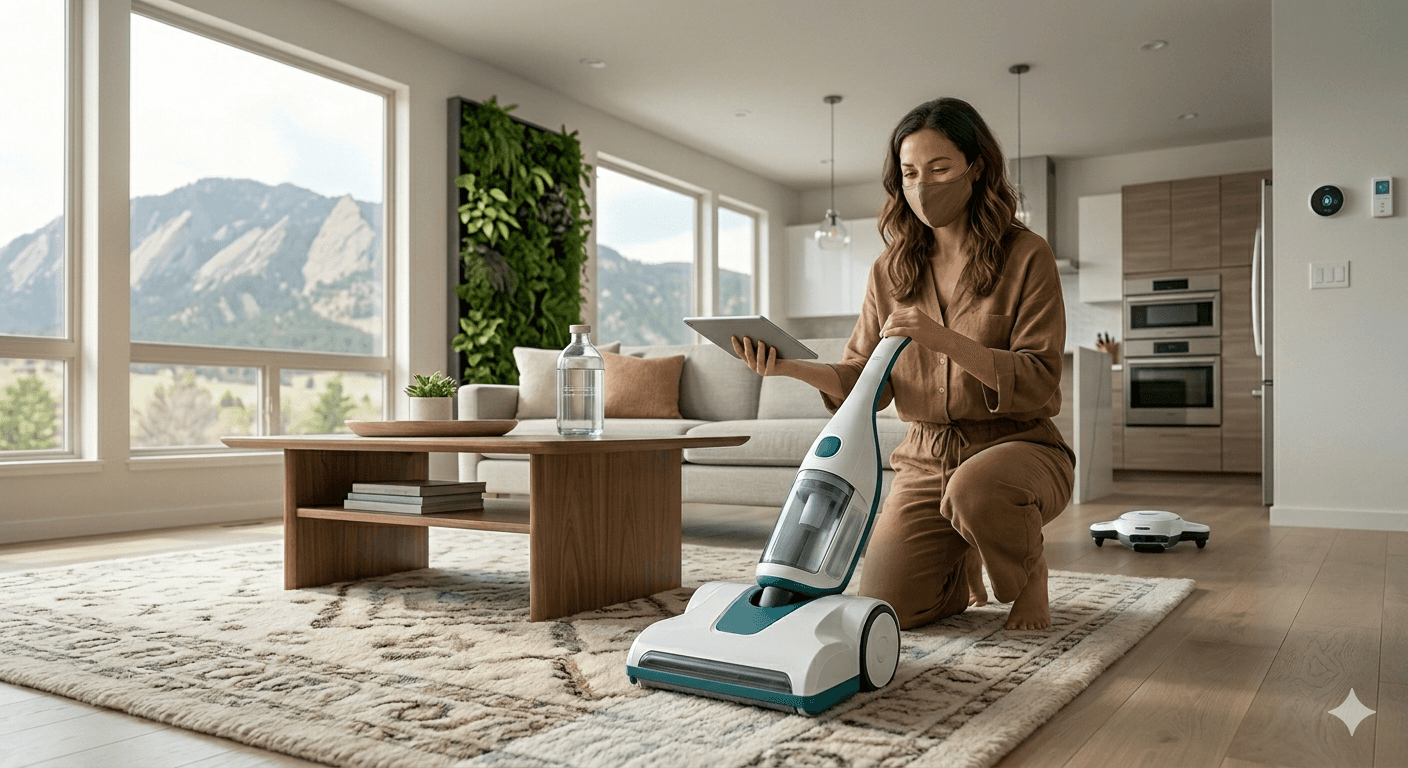
Boulder has always led the way when it comes to living sustainably — and in 2026, that extends right down to how we care for the rugs under our feet. Here's what's changed, what's worth paying attention to, and how Boulder Rug Collective is cleaning rugs with the planet in mind.

Why eco-friendly rug cleaning matters more than ever

Conventional rug cleaning has historically relied on harsh solvents, synthetic detergents, and water-intensive industrial machines. The chemicals rinse off into the water supply. The equipment consumes enormous amounts of energy. And for handmade rugs woven from natural fibers, those processes can actually shorten the life of the rug — meaning more rugs end up in landfills sooner.

In 2026, more homeowners are asking the right questions before booking a cleaning. What's in the soap? How much water is being used? Where does the runoff go? These are good questions — and they deserve honest answers.

Boulder context: Colorado's semi-arid climate makes water conservation especially important. Traditional industrial rug cleaning can use hundreds of gallons per rug. Hand-washing methods use a fraction of that — and done right, they clean more thoroughly.

What's new in sustainable rug cleaning in 2026

The industry has made real progress over the past few years. Here are the most meaningful shifts:

Plant-based enzyme cleaners — Biodegradable formulas that break down stains and odors without synthetic surfactants, safer for fibers and safer for waterways.

Low-water hand washing — Artisan hand-wash methods use dramatically less water than industrial machines while achieving deeper clean results.

Natural fiber preservation — pH-balanced, lanolin-safe soaps that protect wool and silk, extending rug life by decades and reducing replacement waste.

Air drying over machine drying — Controlled air drying eliminates the energy cost of industrial dryers and prevents heat damage to natural dyes and foundations.

How we clean at Boulder Rug Collective

We've always believed that the most sustainable cleaning method is also the most effective one. Our full hand-wash process was built around the way artisan rugs were meant to be cared for — long before "eco-friendly" became a marketing term.

  • We use pH-balanced, biodegradable soaps free from harsh synthetic chemicals

  • Every rug is washed by hand — no industrial spin machines that stress fibers and waste water

  • Rugs are air dried slowly and evenly — no heat, no energy-intensive dryers

  • We never use bleach, ammonia, or optical brighteners that damage natural dyes

  • Our process extends rug life significantly — the most sustainable rug is one you never have to replace

Worth knowing: Many "green" cleaning products on the market still contain synthetic fragrance, optical brighteners, or petroleum derivatives. Always ask what's actually in the formula — or choose a cleaner who can tell you exactly what they use.

The most sustainable choice: making your rug last longer

The greenest thing you can do for a rug isn't just how you clean it — it's how often you care for it. A well-maintained handmade wool rug can last 50 to 100 years. Neglect it, and the same rug might last a decade.

Regular professional cleaning removes the abrasive soil particles that slowly cut through fibers from the inside. It restores the natural oils in wool that keep fibers supple and resilient. And it catches early signs of moth damage, wear, and foundation weakening before they become costly repairs.

For most households, a professional cleaning every 1 to 3 years is enough — depending on foot traffic, pets, and whether the rug is in a high-use area. That's a small investment for a piece that could outlive everyone in the house.

Questions to ask any rug cleaner about their eco practices

Not every cleaner who uses the word "green" is actually operating sustainably. Here are a few questions worth asking:

  • What cleaning solutions do you use, and are they biodegradable?

  • Do you hand-wash or use industrial machines?

  • How do you handle wastewater and rinse runoff?

  • Are your methods safe for natural wool and silk fibers?

  • How do you dry rugs — air or machine?

We're happy to answer every one of these at Boulder Rug Collective. Transparency is part of how we do business.

Ready for a cleaner, greener clean? Drop your rug off at our Boulder location and we'll take care of it the right way — by hand, with the planet in mind.

📍 4919 Broadway St, Suite 8, Boulder, CO 80304

📞 970-970-0070
Related Post

Related Post

Rugs Drying

Aug 18, 2026

/

Post by

If you've been thinking about getting your rugs professionally cleaned — stop thinking and call us now. Not because we're slow in summer. Because summer in Boulder is genuinely the best time of year to clean a rug. Not marginally better — significantly better. At 5,400 feet, UV radiation is stronger than at sea level, killing moth eggs and bacteria that survive the wash. Boulder's summer humidity regularly drops below 20%, producing drying conditions that are exceptional for wool rugs. Faster drying means better results, less mildew risk, and faster turnaround. Your rug has been carrying a full Colorado winter's worth of embedded soil since September. Summer is exactly when it needs cleaning most — and exactly when the conditions are perfect for doing it right.

Aug 4, 2026

/

Post by

We clean both of them every week — Navajo flatweaves from Colorado collections and Turkish kilims from Anatolian tribal traditions. To most people they look similar: flat, geometric, bold, beautiful. Both get called flatweaves and treated as if they belong to the same cleaning category. They don't. The construction differences between a Navajo weaving and a Turkish kilim are fundamental — in loom type, warp structure, edge finishing, fiber, and how color areas meet each other. And every one of those differences affects how they must be professionally cleaned. Here's what separates these two great flatweave traditions, and why knowing the difference before you start washing is the whole job.

Jul 30, 2026

/

Post by

Facebook Marketplace has become one of the best places in Boulder to find a genuine hand-knotted Persian rug at a fraction of its real value. A $3,000 Persian for $200. A genuine tribal kilim for $75. A room-size Afghan piece for $150. We know this because our clients bring them to us every week. But before that rug goes on your floor — there's something most people don't think about when they pull it out of a stranger's car trunk. You don't know where it's been. Pet dander, dust mites, moth eggs, mold spores, chemical residue from years of consumer cleaning products — all of it invisible on the surface, all of it embedded deep in the pile. Here's what professional Persian rug cleaning in Boulder actually removes, and why it's the most important step between a Marketplace find and a rug you can live on with confidence.

Jul 12, 2026

/

Post by

If you've been searching for Persian rug cleaning in Boulder — or Persian rug cleaning near me — we want to show you something. This Persian Tabriz just came through our door. Silk on silk. Crimson field. An all-over garden composition populated with birds, animals, and flowering vines of extraordinary detail — rendered in silk pile at a knot density that photographs can barely capture. It is one of the most remarkable pieces we've had on our wash floor in recent memory. And cleaning it required everything we know. Here's what a silk on silk Tabriz demands from a professional cleaner — and why sending one to a carpet cleaner is a risk no owner should take.

Jul 11, 2026

/

Post by

We washed a few machine-made synthetic shag rugs recently — the kind sold in big box stores across Boulder for $150 to $300 — and the water volume it took to rinse them clean made us stop and do the math. A single 8x10 synthetic shag can cost between $120 and $200 to clean professionally. Every 18 months. On a rug that retailed for $200 and won't last five years. Compare that to a hand-knotted wool rug — less water, gentler chemistry, cleaning every three to five years, and a piece that's worth more at the end of five years than when you bought it. Here's the full cost breakdown, and why the purchase price of a cheap rug is just the beginning of what it actually costs you.

Rugs Drying

Aug 18, 2026

/

Post by

If you've been thinking about getting your rugs professionally cleaned — stop thinking and call us now. Not because we're slow in summer. Because summer in Boulder is genuinely the best time of year to clean a rug. Not marginally better — significantly better. At 5,400 feet, UV radiation is stronger than at sea level, killing moth eggs and bacteria that survive the wash. Boulder's summer humidity regularly drops below 20%, producing drying conditions that are exceptional for wool rugs. Faster drying means better results, less mildew risk, and faster turnaround. Your rug has been carrying a full Colorado winter's worth of embedded soil since September. Summer is exactly when it needs cleaning most — and exactly when the conditions are perfect for doing it right.

Aug 4, 2026

/

Post by

We clean both of them every week — Navajo flatweaves from Colorado collections and Turkish kilims from Anatolian tribal traditions. To most people they look similar: flat, geometric, bold, beautiful. Both get called flatweaves and treated as if they belong to the same cleaning category. They don't. The construction differences between a Navajo weaving and a Turkish kilim are fundamental — in loom type, warp structure, edge finishing, fiber, and how color areas meet each other. And every one of those differences affects how they must be professionally cleaned. Here's what separates these two great flatweave traditions, and why knowing the difference before you start washing is the whole job.

Jul 30, 2026

/

Post by

Facebook Marketplace has become one of the best places in Boulder to find a genuine hand-knotted Persian rug at a fraction of its real value. A $3,000 Persian for $200. A genuine tribal kilim for $75. A room-size Afghan piece for $150. We know this because our clients bring them to us every week. But before that rug goes on your floor — there's something most people don't think about when they pull it out of a stranger's car trunk. You don't know where it's been. Pet dander, dust mites, moth eggs, mold spores, chemical residue from years of consumer cleaning products — all of it invisible on the surface, all of it embedded deep in the pile. Here's what professional Persian rug cleaning in Boulder actually removes, and why it's the most important step between a Marketplace find and a rug you can live on with confidence.