Why In-Home Oriental Rug Cleaning Is Not Okay — And What to Do Instead
You found a service that will clean your Oriental rug right there in your living room. No drop-off, no transport, no hassle. It sounds convenient — and that convenience is exactly what makes it dangerous. In-home rug cleaning is one of the most common ways genuinely valuable handmade rugs get damaged beyond repair. Here is why — and why bringing your rug to a proper rug cleaning facility is the only approach that actually works.

The appeal of in-home cleaning is understandable
Nobody wants to roll up a large rug, haul it to a shop, and wait a week to get it back. The promise of a technician showing up at your door with equipment and cleaning it on the spot — on your floor, in your home, with minimal disruption — is genuinely appealing. We understand why people choose it.
But convenience is not the same as quality. And when it comes to Oriental and handmade rugs — pieces that can be worth thousands of dollars and that represent irreplaceable cultural and personal value — the gap between what in-home cleaning promises and what it delivers is significant and sometimes catastrophic.
Problem one — the dust never comes out
This is the most fundamental issue with in-home rug cleaning and the one that is hardest to see until you understand how rug soil actually works.
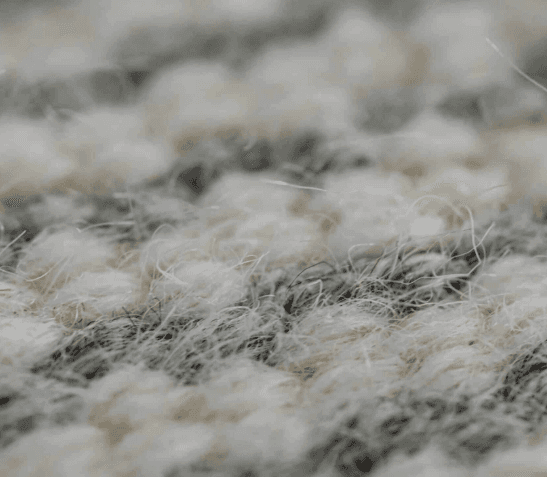
A handmade Oriental rug accumulates soil in layers. The surface layer — the visible dust and debris on top of the pile — is what vacuuming addresses and what looks clean after a surface treatment. But beneath that surface layer, deep in the pile and settled into the foundation, is years or decades of compacted particulate matter — fine grit, dust, dried organic material, and allergens that have worked their way down through the pile with every footfall and every passing year.
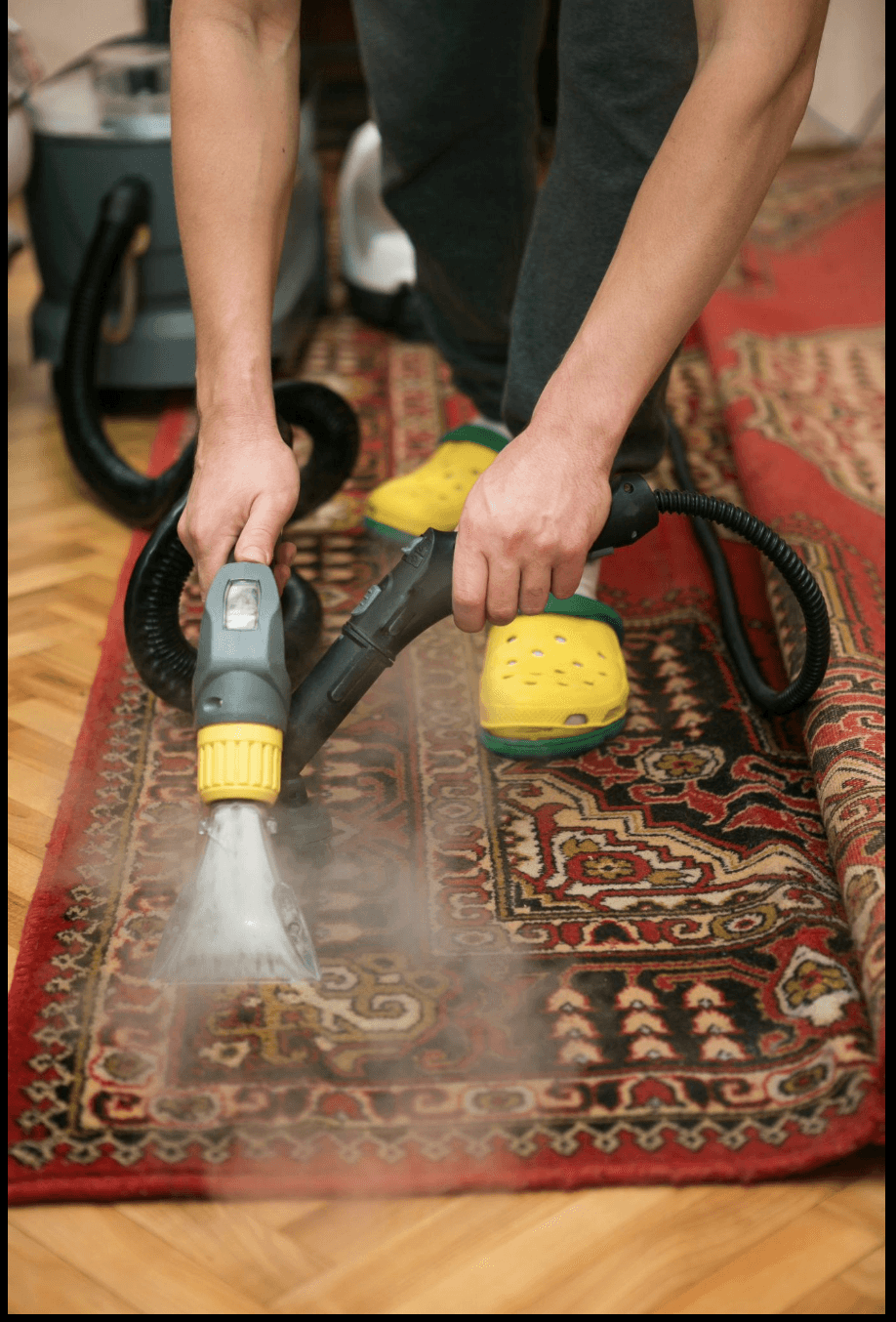
This deep-set soil does not come out with in-home cleaning. The equipment used in in-home treatments — portable extraction machines, surface sprayers, handheld cleaning tools — simply does not have the capacity to reach and remove soil that has compacted into the foundation of the rug.
At Expert Rug Cleaning we start every rug with a compressed air dusting process before any water touches it — blasting dry particulate matter out of the pile and foundation before the wash begins. This step alone removes a volume of soil that in-home cleaning never addresses at all. Without it, you are essentially washing the surface of a rug while leaving the deeper contamination entirely in place.
A rug that has been in-home cleaned looks cleaner. It is not significantly cleaner. The difference matters enormously for the long-term health of the rug and the air quality of your home.
Problem two — portable suction equipment damages pile
The extraction equipment used in most in-home rug cleaning operations is designed primarily for wall-to-wall carpet — a fundamentally different product from a hand-knotted Oriental rug with a wool pile tied knot by knot onto a natural fiber foundation.
Wall-to-wall carpet has a synthetic backing that is essentially impervious to mechanical stress. It can handle aggressive suction, rotating brush heads, and repeated heavy extraction passes without damage. A hand-knotted Oriental rug cannot.
The pile of a genuine handmade rug consists of individual wool or silk knots tied to warp threads under specific tension. Aggressive suction from portable extraction equipment pulls at these knots — stressing the pile foundation, loosening individual knots, and in some cases pulling pile fibers out of the foundation entirely. The damage is often invisible at first and becomes apparent weeks or months later as thin patches, pile loss, and uneven wear develop across the surface.
Rotating brush attachments — sometimes used with in-home cleaning equipment — are even more problematic. A beater bar or rotating brush on a hand-knotted pile is one of the fastest ways to cause serious pile damage to a genuine Oriental rug. It should never be used and reputable in-home operators know this — but not all of them are reputable.
Problem three — the rug stays wet too long
This is perhaps the most serious risk associated with in-home rug cleaning — and it is the one that causes the most irreversible damage.
When a rug is cleaned in-home, it stays on your floor to dry. In a typical Boulder home — with hard floors beneath the rug, furniture around it, and normal household air circulation — a cleaned rug lying flat on the floor can take anywhere from 24 to 72 hours to dry completely. In humid conditions, basements, or rooms with poor air circulation, it can take longer.
During this entire drying period, the rug is lying face-down or flat on a hard surface with moisture trapped between the pile, the foundation, and the floor beneath. This creates the perfect conditions for several serious problems.
Mildew and dry rot develop in rug foundations that stay wet for extended periods. The foundation threads — the warp and weft that hold the entire structure of the rug together — are particularly vulnerable to moisture damage. Dry rot weakens these threads progressively and is one of the leading causes of structural failure in older rugs. Once dry rot takes hold it is very difficult to reverse and in severe cases makes a rug structurally unrepairable.
Moisture trapped between the rug and a hard floor also damages the floor itself. On hardwood especially, extended moisture contact causes cupping, warping, staining, and finish damage that requires expensive refinishing to address.
At Expert Rug Cleaning every rug is dried in a controlled facility environment after cleaning — elevated off the floor, with professional air circulation equipment, monitored until completely and evenly dry throughout the entire thickness of the pile and foundation. This is the only way to guarantee that no moisture is left behind.
Problem four — in-home operators are not rug specialists
This is a point worth making honestly and directly.
Most in-home rug cleaning services are carpet cleaning companies that have added Oriental rug cleaning to their service menu. Their technicians are trained in carpet cleaning — a completely different discipline from handmade rug care. The fiber types are different. The dye chemistry is different. The structural vulnerabilities are different. The cleaning chemistry requirements are completely different.
A carpet cleaning technician working on a hand-knotted Persian or tribal rug is operating outside their area of expertise — and in most cases they know it. They are doing their best with equipment and knowledge that was not designed for what they are being asked to do.
The results reflect this. We regularly see rugs at Expert Rug Cleaning that have been damaged by well-intentioned in-home cleaning — pile loss from aggressive suction, dye bleeding from inappropriate cleaning chemistry, foundation damage from extended wet drying, and color distortion from cleaning solutions that were not formulated for natural fiber rugs.
Problem five — dye bleeding is a real and permanent risk
The dyes in genuine Oriental and handmade rugs — whether natural or early synthetic — respond to water and cleaning chemistry in ways that require specific knowledge and careful handling. Different dye types have different stability profiles. Different fiber types absorb and release moisture differently. The pH of the cleaning solution matters enormously — a solution that is fine for synthetic carpet can cause irreversible color migration in a wool rug with natural dyes.
In-home cleaning operators rarely test dye stability before cleaning. They apply a standard cleaning solution across the entire rug and hope for the best. On a machine-made synthetic rug this is usually fine. On a hand-knotted Persian, Afghan, or Turkish rug with wool pile and natural or transitional-era dyes, it is a genuine gamble.
Dye bleeding — red migrating into ivory, navy running into the field, warm tones shifting across color boundaries — is one of the most heartbreaking forms of rug damage because it is largely irreversible. Once dyes have migrated, restoring the original color boundaries is extremely difficult and in many cases impossible.
At Expert Rug Cleaning we test dye stability on every rug before washing and adjust our cleaning approach accordingly. This is standard practice in a proper rug cleaning facility. It is essentially never done in in-home cleaning.
What proper rug cleaning actually looks like
When you bring your rug to Expert Rug Cleaning here is what actually happens.
We start with a full assessment — pile condition, foundation integrity, dye stability, any signs of moth activity, previous repairs, or existing damage. We tell you honestly what we find and what the rug needs.
Then we dust — compressed air blasting that removes the deep-set dry particulate matter from the pile and foundation before any water touches the rug.
Then we wash — full submersion hand-washing with pH-balanced, pet-safe, non-toxic cleaning solutions formulated for natural fiber rugs. The entire rug — pile, foundation, and weft — gets cleaned all the way through.
Then we extract — using professional suction equipment calibrated for handmade rugs, not carpet. No centrifuge stress on aged foundations. No aggressive brush heads on delicate pile.
Then we dry — in a controlled facility environment, elevated, with professional air circulation, monitored until completely dry throughout.
Then we inspect — a final check before the rug goes home to make sure everything is right.
This is what your rug deserves. It is not what in-home cleaning delivers.
Bring your Oriental or handmade rug to Expert Rug Cleaning in Boulder. We will take care of it properly — the way it was always meant to be cleaned.