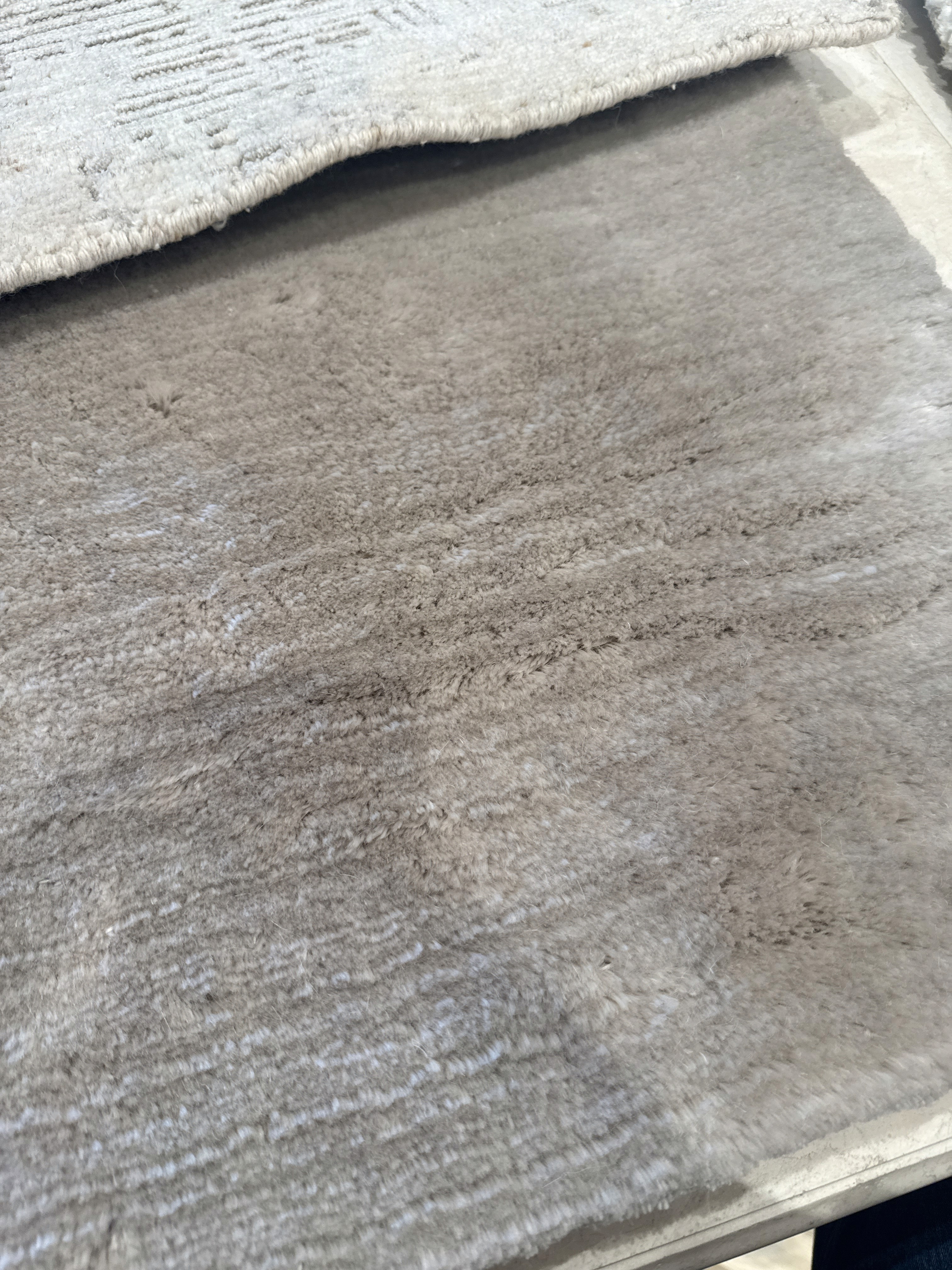
An 80-Year-Old Heriz Comes In: What Persian Rug Cleaning Really Looks Like
A client brought in a rug his parents had owned for decades — an antique Gorevan Heriz, 80 years old, fully vegetable dyed, geometric medallion in terracotta and navy. Inherited. Loved. In remarkable condition. It needed a full immersion wash, side cord repair, and end finishing before it moved into his own home. This is the kind of work we do every week at Expert Rug Cleaning in Boulder — and it’s also a window into what “Persian rug cleaning near me” should actually mean when the rug in question is a hand-knotted antique worth protecting.

A client walked in last week carrying something his parents had owned for decades.
An antique Gorevan Heriz. Roughly 9 by 12 feet. Eighty years old, fully vegetable dyed, geometric medallion in terracotta and navy on an ivory field. He inherited it when they passed. It had lived in their home his entire life. He wanted it cleaned, the side cords repaired, and the ends secured before it moved into his own.
This is the kind of rug we work on every week — and it’s also the kind of rug that most people in Boulder have no idea how to find proper care for. If you’ve searched “Persian rug cleaning near me” and found mostly carpet cleaning companies, this post is for you.
What Is a Gorevan Heriz?
Heriz rugs come from the Heriz region of northwestern Iran, in the East Azerbaijan province south of Tabriz. They are among the most recognized and most collected of all Persian rugs — bold geometric designs, strong medallion formats, the characteristic angular drawing that sets them apart from the curvilinear designs of Tabriz or Isfahan.
Gorevan is a village within the Heriz weaving district. Gorevan rugs are typically coarser in knotting than the finest Heriz pieces — a lower knot count, a heavier hand — but they are extraordinarily durable. The wool is thick. The construction is robust. An 80-year-old Gorevan Heriz in good condition is not unusual; these rugs were built to last.
The vegetable dyes in a piece this age are something specific. The terracotta, the navy, the ivory, the soft gold in the border — those colors came from pomegranate rind, indigo, madder root, and weld. They have aged together over eight decades into a patina that no synthetic dye achieves. The colors have softened and harmonized in a way that only time produces. This is part of what makes antique vegetable-dyed rugs valuable in a way that has nothing to do with fashion.
What It Needed
When we examined the rug, the picture was clear:
Full immersion wash. Eighty years of accumulated soil, dust mite material, and biological load in the foundation. The pile looked presentable — these old wool rugs often do — but the foundation told a different story. A proper wash means the whole rug goes into the water. Robert Mann handles the entire process from inspection through final groom, with the machine wash step handled by our specialist subcontractor. Everything else — inspection, prep, drying, repair — is done in our shop.
Side cord repair. The side cords — the wrapped edges that finish the rug’s selvage — had worn through in several places. This is the most common structural issue in antique Heriz rugs. The side cords take constant abrasion from foot traffic and furniture placement. When they fail, the edge of the rug begins to unravel inward. Addressing it now, before the rug goes into decades more of daily use, protects the body of the piece.
End finishing — chaining the ends. The warp ends at both ends of the rug needed to be secured. On a hand-knotted rug, the warp threads form the structural foundation — the cotton skeleton the knots are tied around. When those ends are left unfinished or when the original finishing has deteriorated, the knots at the end rows begin to loosen and the rug loses pile from the ends inward. Chaining locks the warp ends and stops that process.
Why This Rug Cannot Go to a Carpet Cleaner
We get calls every week from people who tried a carpet cleaning company first.
The problem is fundamental. Carpet cleaning is designed for wall-to-wall synthetic carpet. The chemistry is alkaline — appropriate for nylon and polyester, damaging to wool over time. The truck-mount systems inject solution under pressure and extract it rapidly. The rug is cleaned in place, on the floor, without ever being fully saturated.
That process does not work on a hand-knotted wool rug, and on an 80-year-old vegetable-dyed piece it causes specific harm:
The alkaline chemistry attacks the wool fiber’s protein structure. Vegetable dyes — particularly the natural indigo used in antique navy fields — are sensitive to pH. Repeated alkaline cleaning shifts the color in ways that are not reversible. The rapid extraction misses the foundation entirely. And the rug is never actually clean — surface clean, maybe, but the soil load in the foundation that is abrading the cotton and grinding against the wool knots from inside continues undisturbed.
A Gorevan Heriz that has been carpet-cleaned five times is a rug that has been gently damaged five times. It may still look fine. The damage is in the foundation, in the fiber, in the dye that has shifted incrementally with each alkaline hit.
Full immersion washing with pH-neutral chemistry, proper rinsing, and controlled drying is the only process that actually cleans a hand-knotted wool rug without harming it.
What “Persian Rug Cleaning Near Me” Should Actually Mean
When you search for Persian rug cleaning near you in Boulder or anywhere on the Front Range, you are looking for something specific — whether or not you know the terminology yet.
You are looking for someone who washes rugs flat, not in place. Who tests dyes before washing. Who uses chemistry appropriate for natural fiber and natural dye. Who rinses thoroughly, dries controlled, and handles the foundation — not just the surface.
You are not looking for a carpet cleaner who also does rugs. That service exists and it is not the same thing.
At Expert Rug Cleaning in Boulder, every piece that comes through the door gets the full process. Persian rugs. Tribal rugs. Antique pieces like this Gorevan Heriz. Silk rugs. Flatweave kilims. Moroccan shags. Each gets the inspection, the dye test, the chemistry matched to the fiber, the full wash, the controlled dry.
Robert Mann does the work. Not a crew, not a franchise, not a subcontracted out-of-state facility. The work happens here, at 4919 Broadway St in Boulder, and you can ask about your specific rug before you bring it in.
This Rug, After
The Gorevan Heriz will come back to its new owner clean in a way it probably hasn’t been in decades. The foundation clear of accumulated soil. The vegetable dyes undisturbed. The side cords rebuilt. The ends secured for another generation of daily use.
Eighty years old and well made. With proper care it will last another eighty.